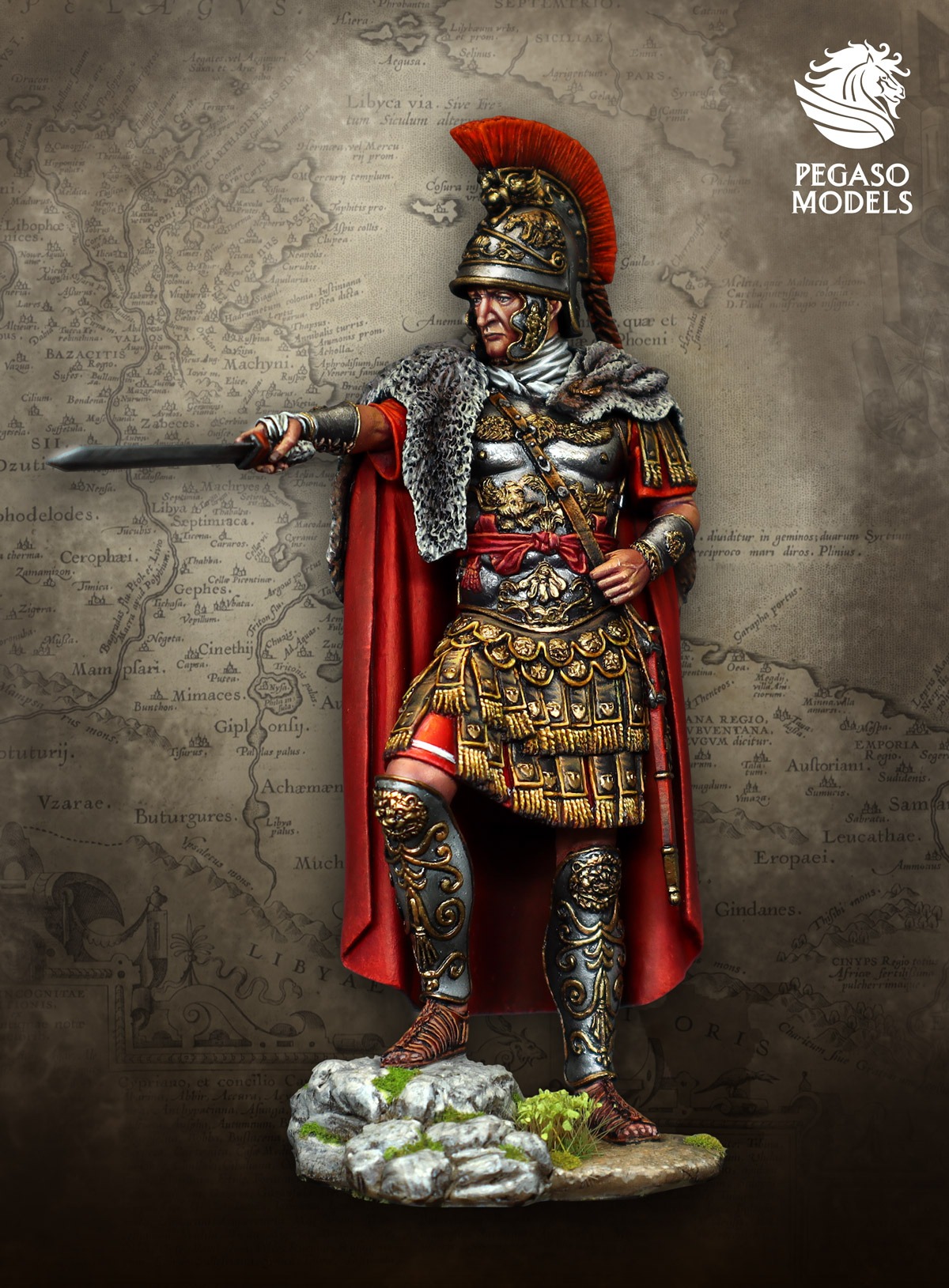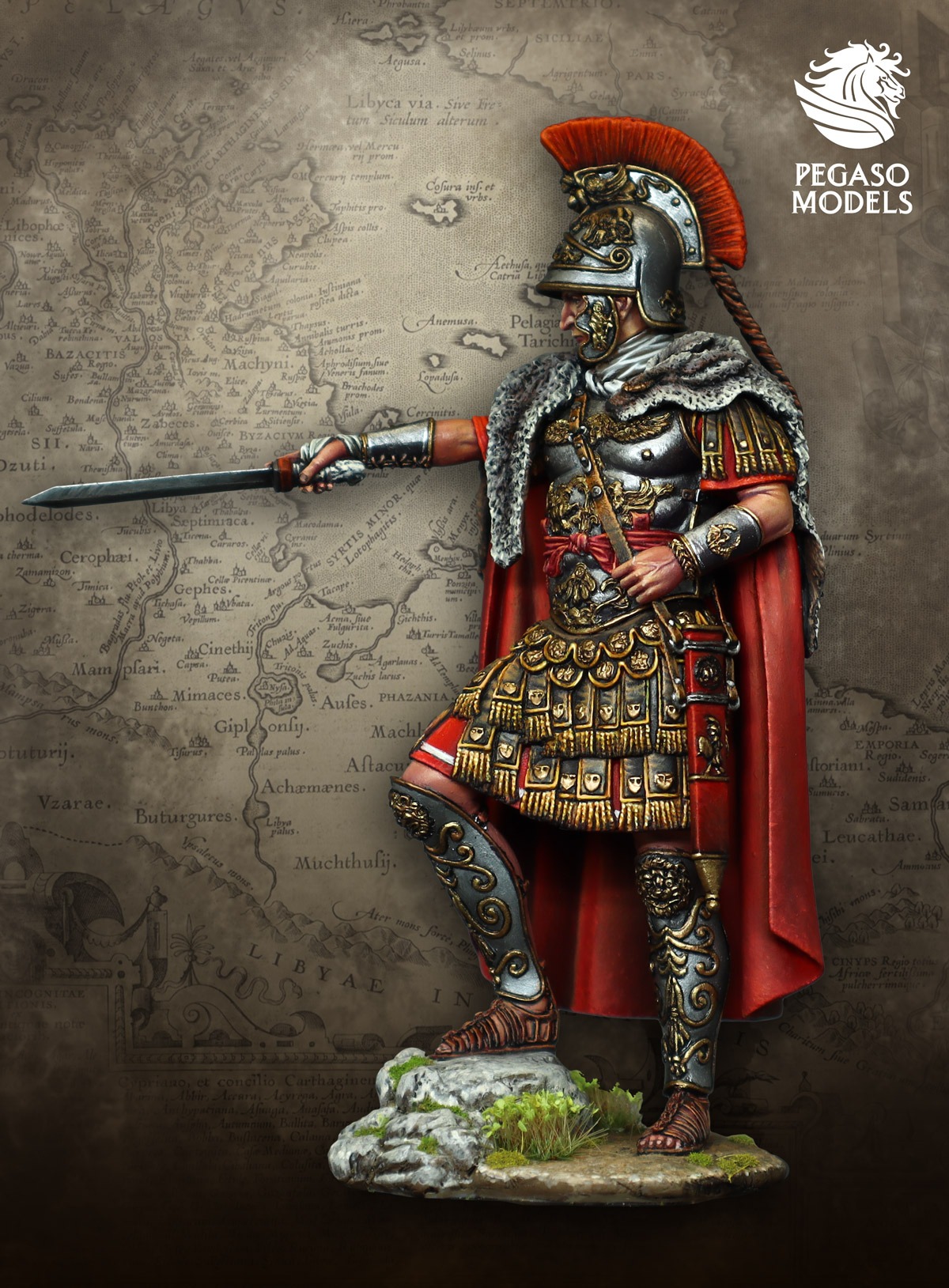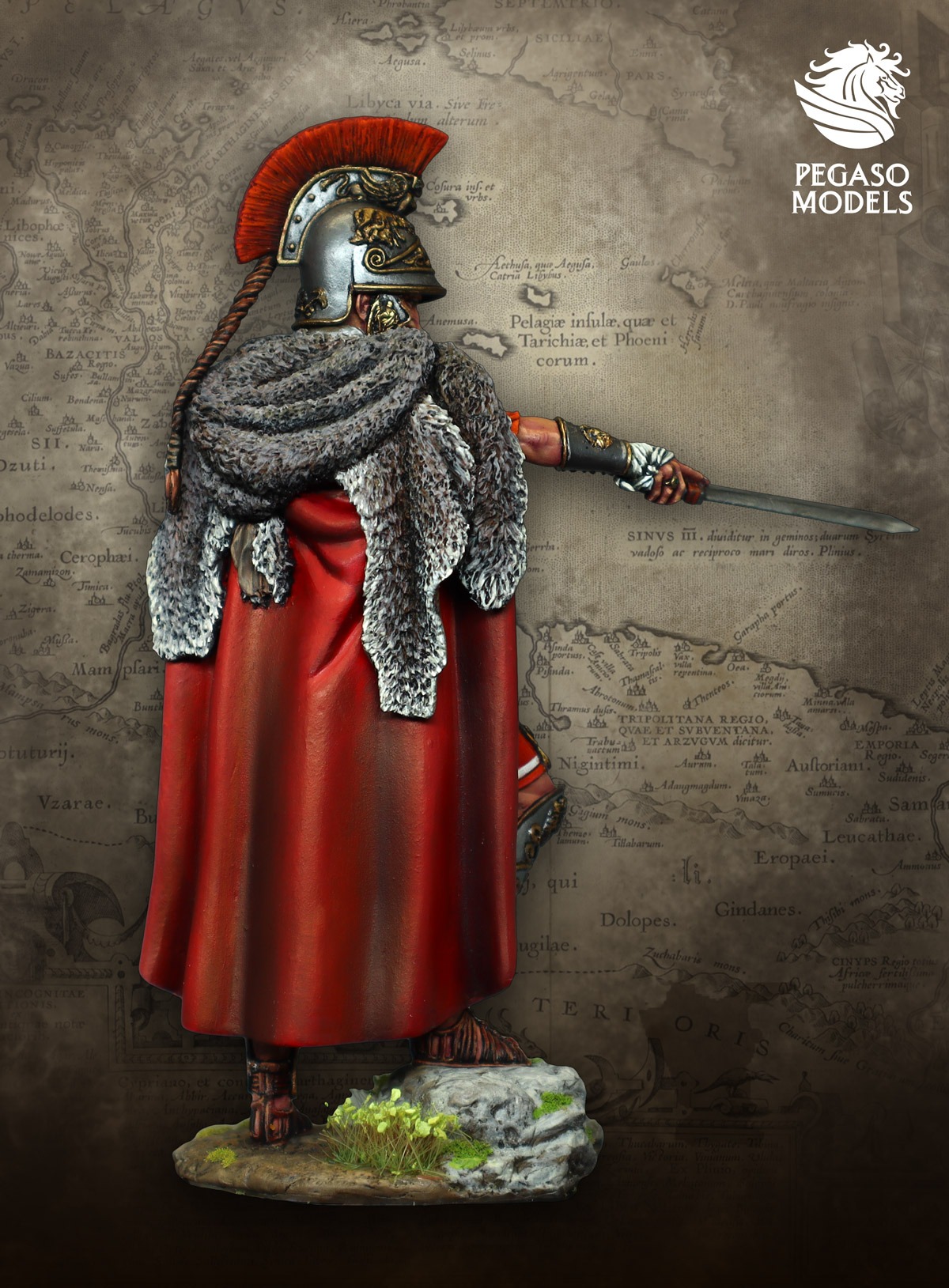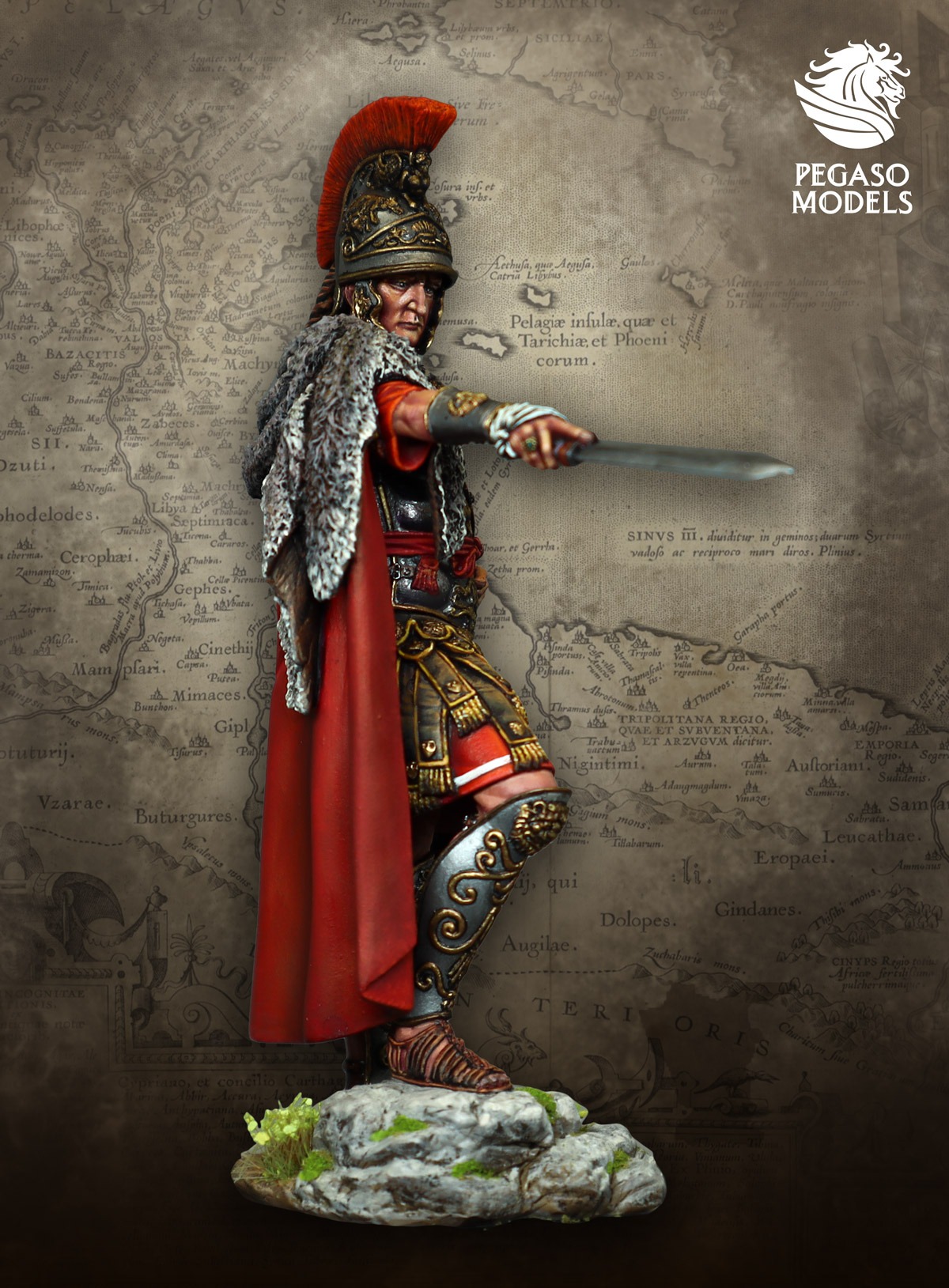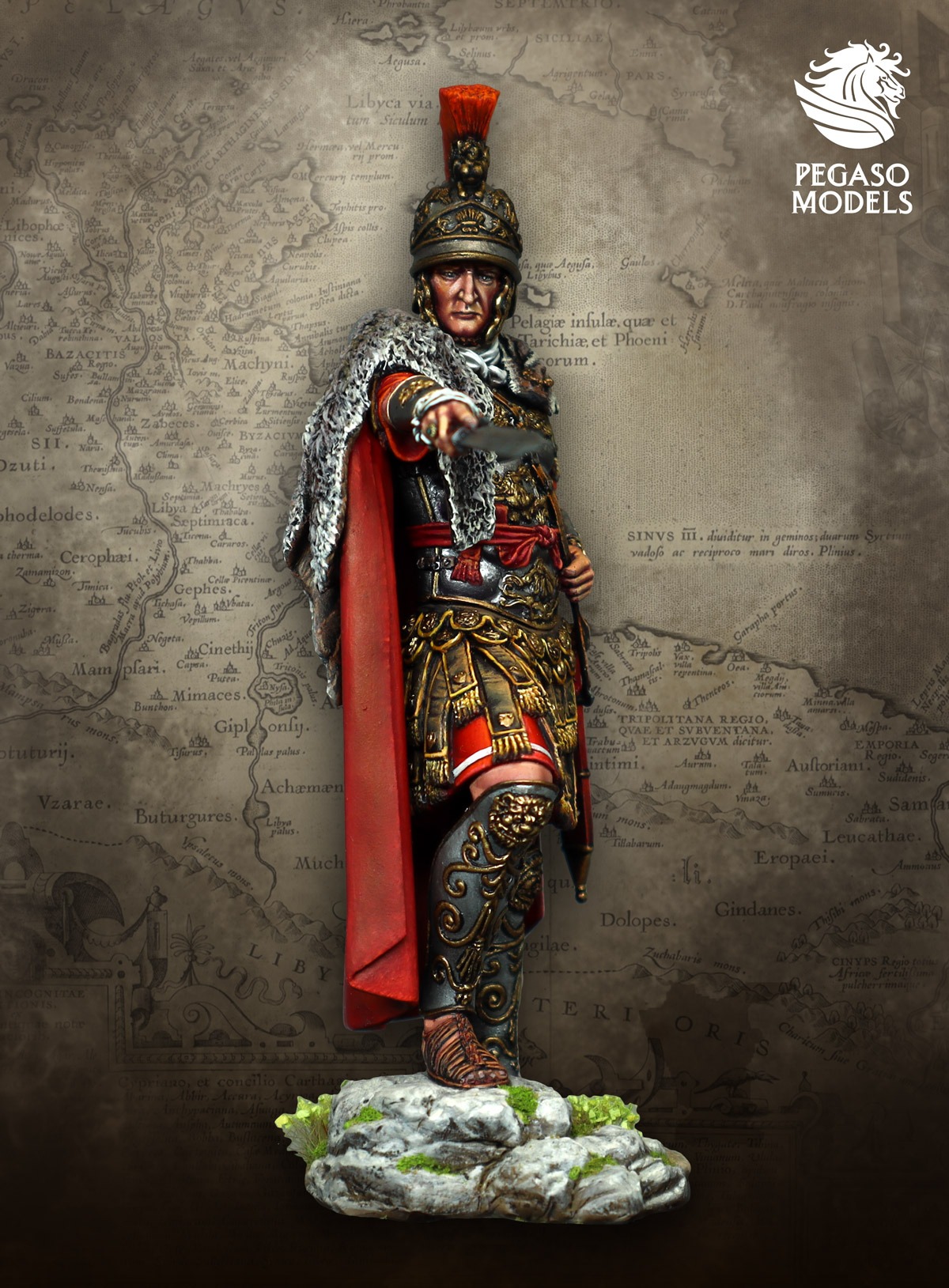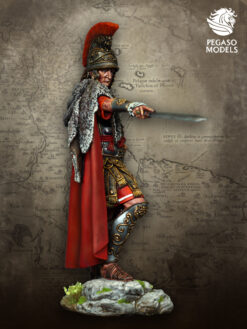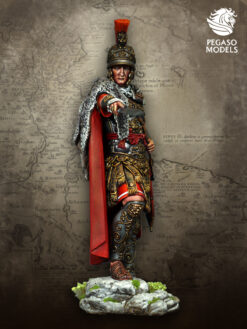
Draped in crimson and gold, Scipio Africanus commands with poise and purpose. His sword points not only toward battle, but toward destiny—marking the moment when Rome asserted itself over its most formidable enemy. This Scipio 90mm historical miniature captures the presence of a general whose name would echo through time.
The model presents Scipio as he might have stood at Zama in 202 B.C., leading the legions with unwavering authority. From the finely embossed breastplate depicting mythic lions to the regal red cloak billowing behind him, every element radiates confidence, tradition, and leadership. The helmet, adorned with lion and horse motifs, reinforces both martial strength and classical symbolism.
This figure tells a story of tactical brilliance and Roman glory. Sculpted with attention to proportion, movement, and period authenticity, it offers a unique opportunity to explore tonal golds, polished bronze, and rich fabrics. The folds of the cloak, the rugged terrain underfoot, and the commanding gesture of the outstretched sword combine into a composition of imperial drama.
📦 Scale: 90mm
🛠️ Material: High-quality resin
🏛️ Subject: Scipio Africanus, Roman general – Zama 202 B.C.
🔗 Follow Pegaso and Kimera on Instagram, Facebook, and YouTube for showcases and release news.

Samurai Warrior, Momoyama Period. Japan 1574-1602 AD
Trumpeteer Major of 2nd Lanciers Guard, France, 1811-13
Roman Corner – 54mm ancient roman scenery
Camelia
Fountain – 54mm Historical Miniature Scenery
The Holy Whisperer
Nerine
Guang Yu - Resin Version
Indian Chief
Roman Centurion
Mirmillone
Galen - Paladin Miniature
Knight of the Holy Sepulcher
Pretorian Guard, 1? cen. B.C.
Ninja Warrior
Teutonic Knight XV Cen.
Jorgun
Archery Lessons
Beeleth - Demon
First Lieutenant Northern Virginia Army, CSA 1863-1865
Napoleon at the Battle of Austerlitz, 1805
Horos - Light Cleric
Private Gunner, Royal Regiment of Artillery, England, Minden 1759
Trumpeter of the Artillery Train of the Guard, 1807-10
British Light Dragoon, Officer 11th Regt. 1811
Captain Jean-Baptiste Isidore Martin, 1805