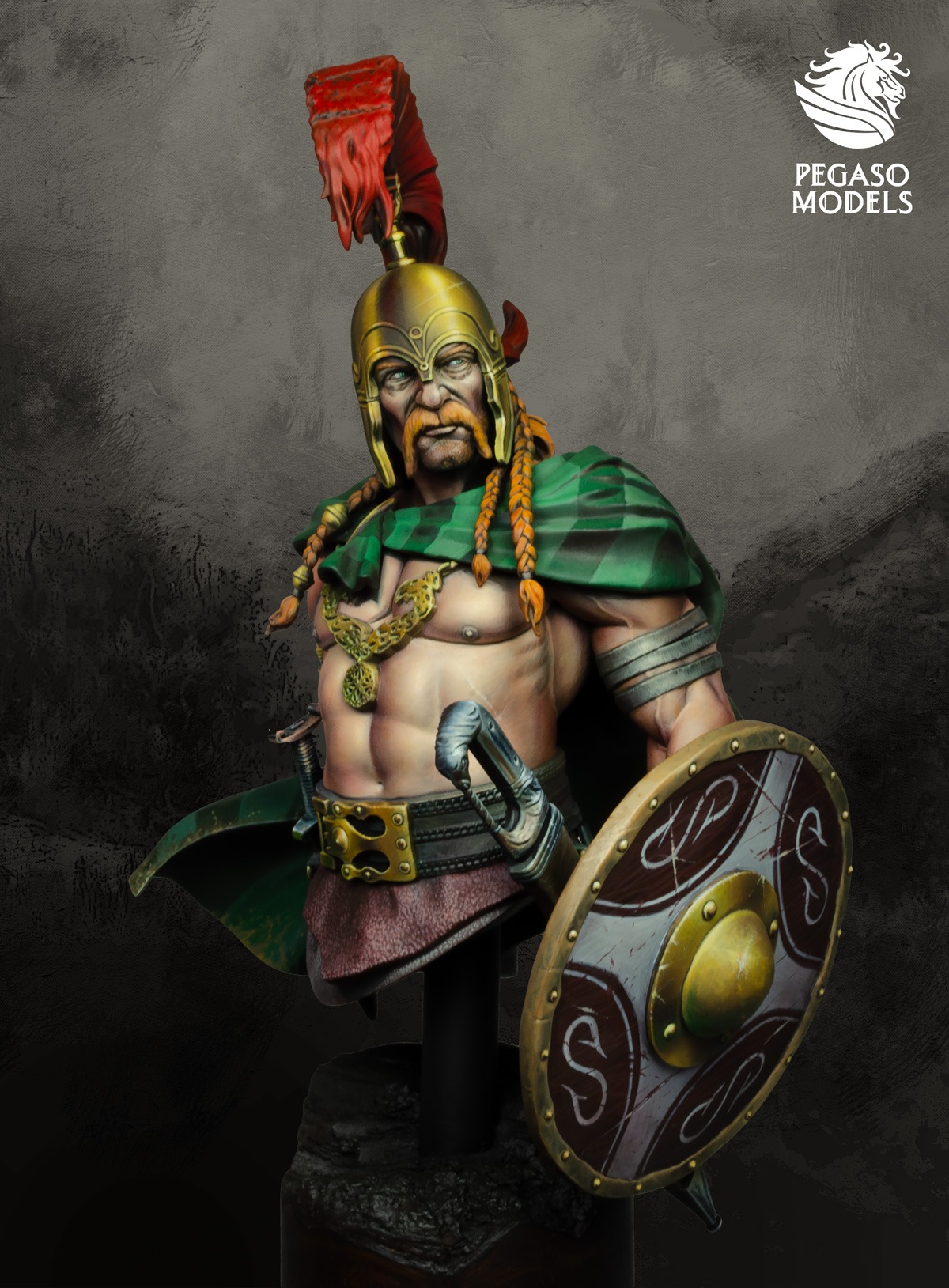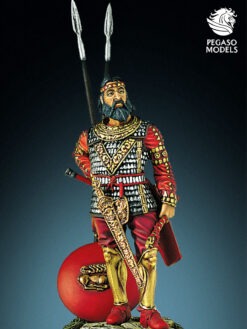
Looking for your next bold and immersive painting experience? This 200mm Celtiberian historical bust offers everything a history-loving painter could ask for—drama, detail, and undeniable presence.
Representing a fierce warrior of the ancient Celtiberian tribes, this bust is a true celebration of character and craftsmanship. From the intense facial expression to the textured shield and flowing cloak, the 200mm Celtiberian historical bust invites you to dive deep into texture, volume, and storytelling through paint.
Sculpted by Ivan Mata and painted in studio by Matteo Carnevale, this figure showcases what makes large-scale busts so satisfying: the freedom to explore every wrinkle, surface, and transition with precision. The clean casting in high-quality resin ensures that every feature is crisp—from the finely sculpted helmet to the braided hair and worn fabrics.
This bust gives you the chance to push contrast, play with skin tones, master metallics, and practice smooth transitions on a larger surface. Whether you’re aiming for realism, mood lighting, or something with a bold painterly touch, the 200mm Celtiberian historical bust responds beautifully to your style.
It’s more than just a painting project. It’s a tribute to ancient warriors and a chance to bring a slice of history to life with your personal interpretation.
👉 Want more like this? Explore the full Pegaso Shop historical collection
👉 Stay connected with us on Instagram, Facebook, and YouTube
Honor the past. Challenge your skills.
Paint the Celtiberian Warrior.

Tisiphone TUTORIAL - Riccardo Agostini - PDF (eng)
Officer in Campaign Uniform, 1808
Fallschirmjager
Captain ADC to Marshal Suchet, 1811
Scottish Lord XVIII
Lokaris - Wolf Barbarian
Nordic House – 54mm Log Cabin Scenery
Templar Knight XII c.
Jean Andoche Junot, 1771-1813
Bounty Killer
Miles Christi, Crusader XII c.
Scottish Gentleman
Obitus - Dark Warrior
Scottish Nobleman, 14th Century
Bibracte 58 AC
Spartan Oplite
Retiarius
Eliumbra - 38mm Assassin Miniature
Daimyo, Mounted Japanese War Lord, Azuchi-Momoyama period (1568-1600)